


This post contains affiliate links. As an Amazon Associate I earn from qualifying purchases.
Two drops of gel into a bowl of white frosting and you have the shade of a deep summer sky. A teaspoon of blue spirulina powder into a second bowl and you have the soft, dusty teal of seaglass. Same starting point both times is just a tub of white frosting from the baking aisle. Two different routes to get there. One synthetic and punchy, one natural and muted. Either way, you end up with blue frosting that holds its color through a piping bag, sits clean on a cupcake, and doesn’t taste fake.
I experimented with blue spirulina as a natural blue food colorant so you don’t have to. (But I think you should.)
This is how to make blue frosting without a stand mixer, without making homemade buttercream frosting from scratch, and without guessing at the shade. Pick the method that fits the look you want, or do both side by side like we did and build a whole spectrum of blues onto one tray of cupcakes.
Trying to color white chocolate or vanilla dip/coating blue too? Here’s your how-to.
WANT TO SAVE THIS?
Steps + Photos to make this recipe for Blue Frosting
Two methods. Pick one or do both. The first method gets you saturated, punchy blue fast. The second gets you a softer, more natural blue with no artificial dye. Your choice of sprinkles just for fun.
Method 1: Gel Food Coloring
Step 1: Empty a tub of white frosting into a medium bowl. We tested with Great Value Vanilla Frosting and Pillsbury Classic White Frosting, the two most common store-bought options. Both took color the same way. Stir the frosting for a few seconds with a rubber spatula to loosen it up before you add any coloring.
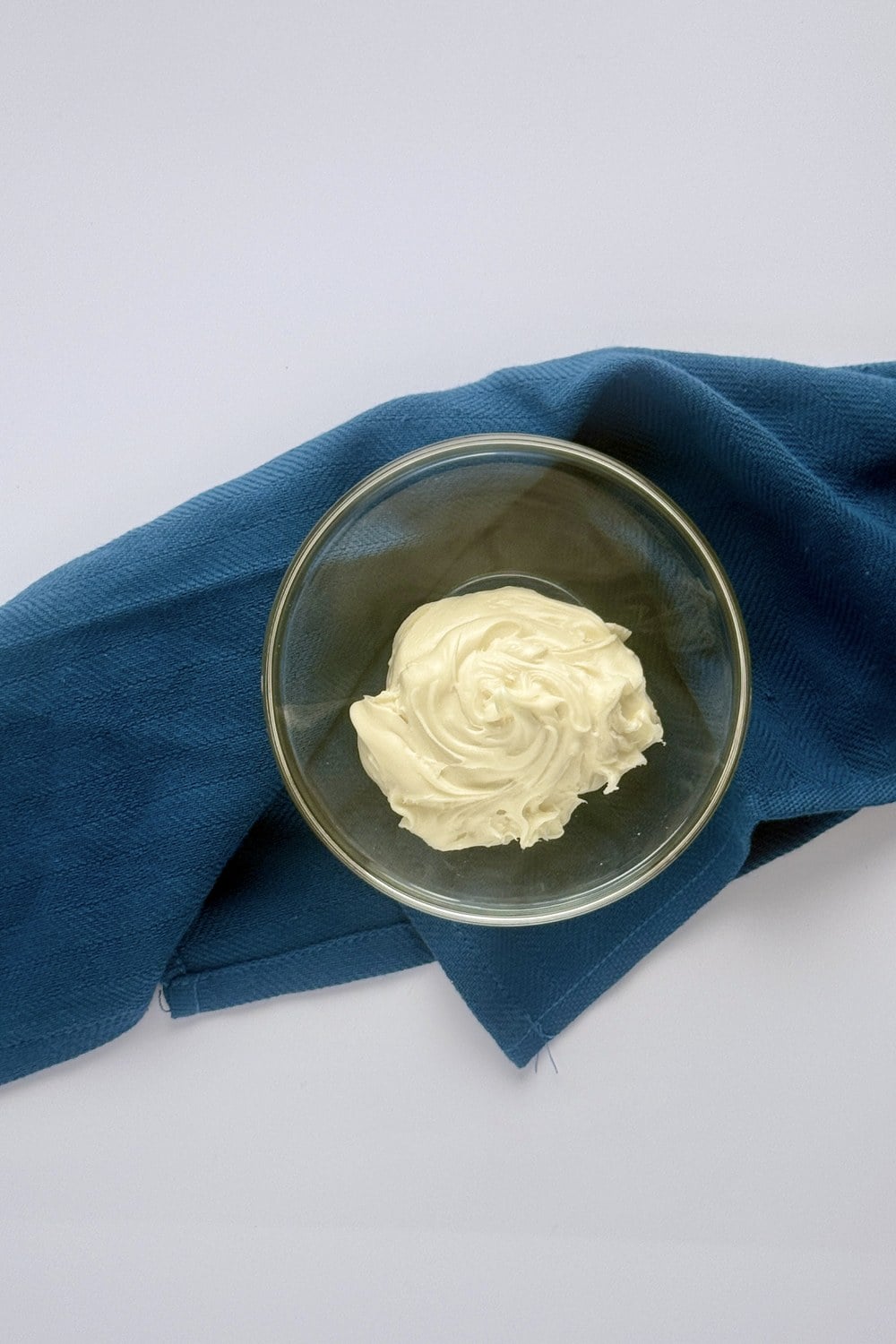
Step 2: Add blue gel food coloring one drop at a time. Start with two drops of royal or sky blue gel for a soft pastel, four to six drops for a true mid-tone royal blue frosting, and eight or more for a deep navy blue frosting. Gel is concentrated, so add a drop at a time. You can always add more, you can’t take it out. (Though if you hold back some white frosting, you can stir more in if you went too far in the blue direction.)
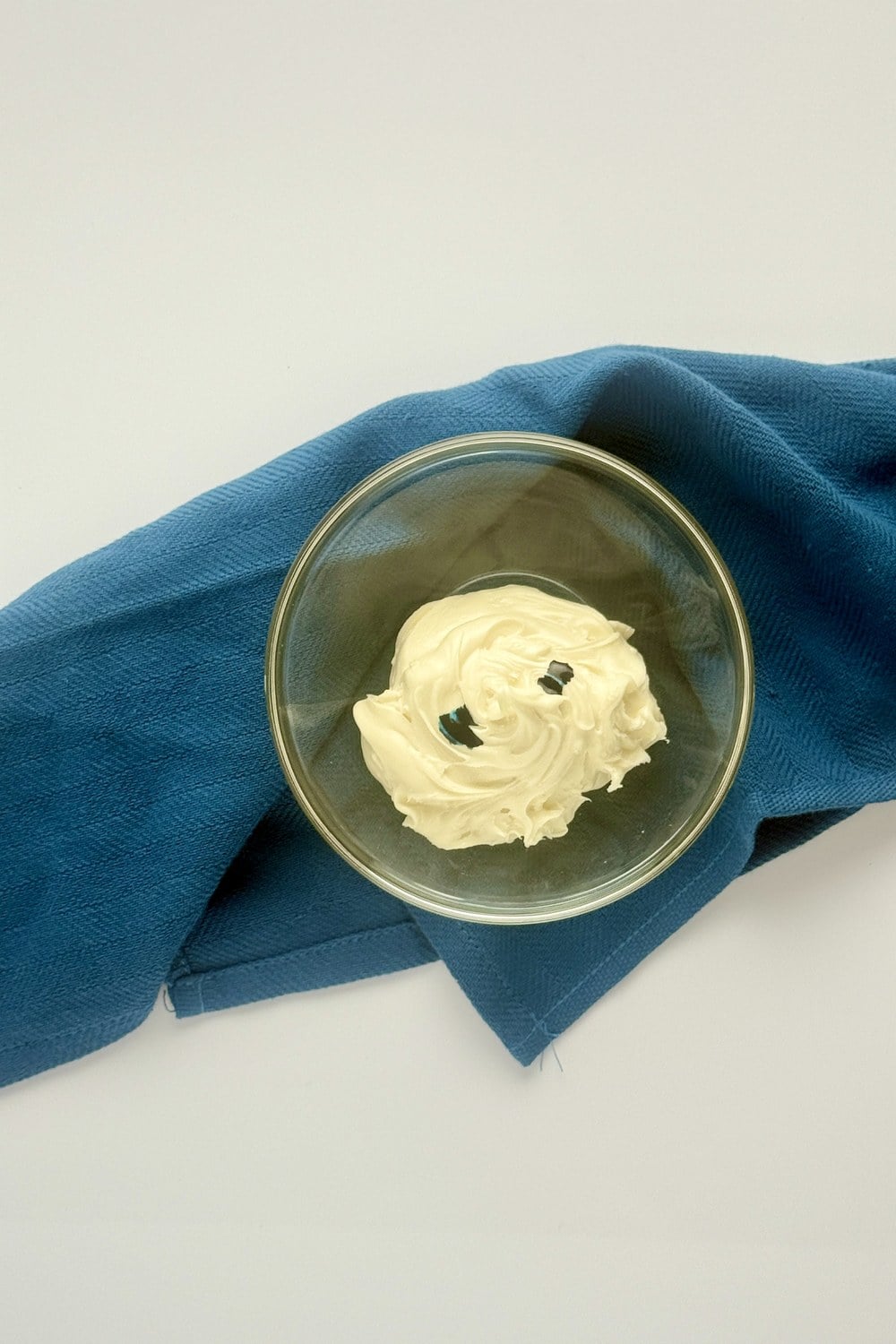
Step 3: Fold the gel into the frosting with the spatula, pressing it through the streaks until the color is fully uniform. This takes longer than you think. Keep folding until you stop seeing dark veins running through the lighter base.
Step 4: If the frosting feels stiffer after mixing, leave it on the counter for five minutes and stir once more. Gel coloring can tighten the texture briefly, and a short rest brings it back to a smooth, spreadable consistency.
Method 2: Blue Spirulina Powder
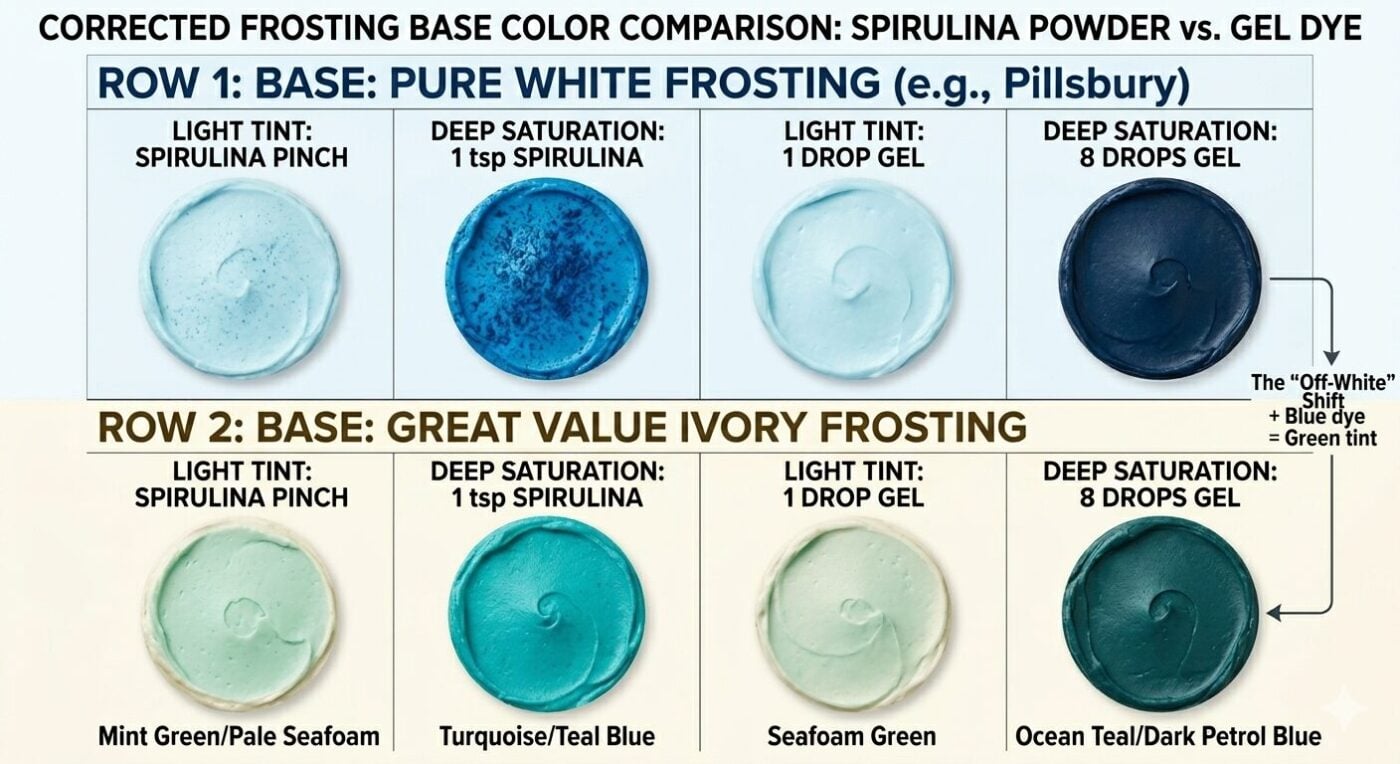
Step 1: Empty a tub of white frosting into a separate medium bowl. Same starting point as Method 1. Great Value Vanilla pulls a little bit warmer/ivory than Pillsbury Classic White, so if you want the cleanest naturally blue frosting, Pillsbury is the better base.
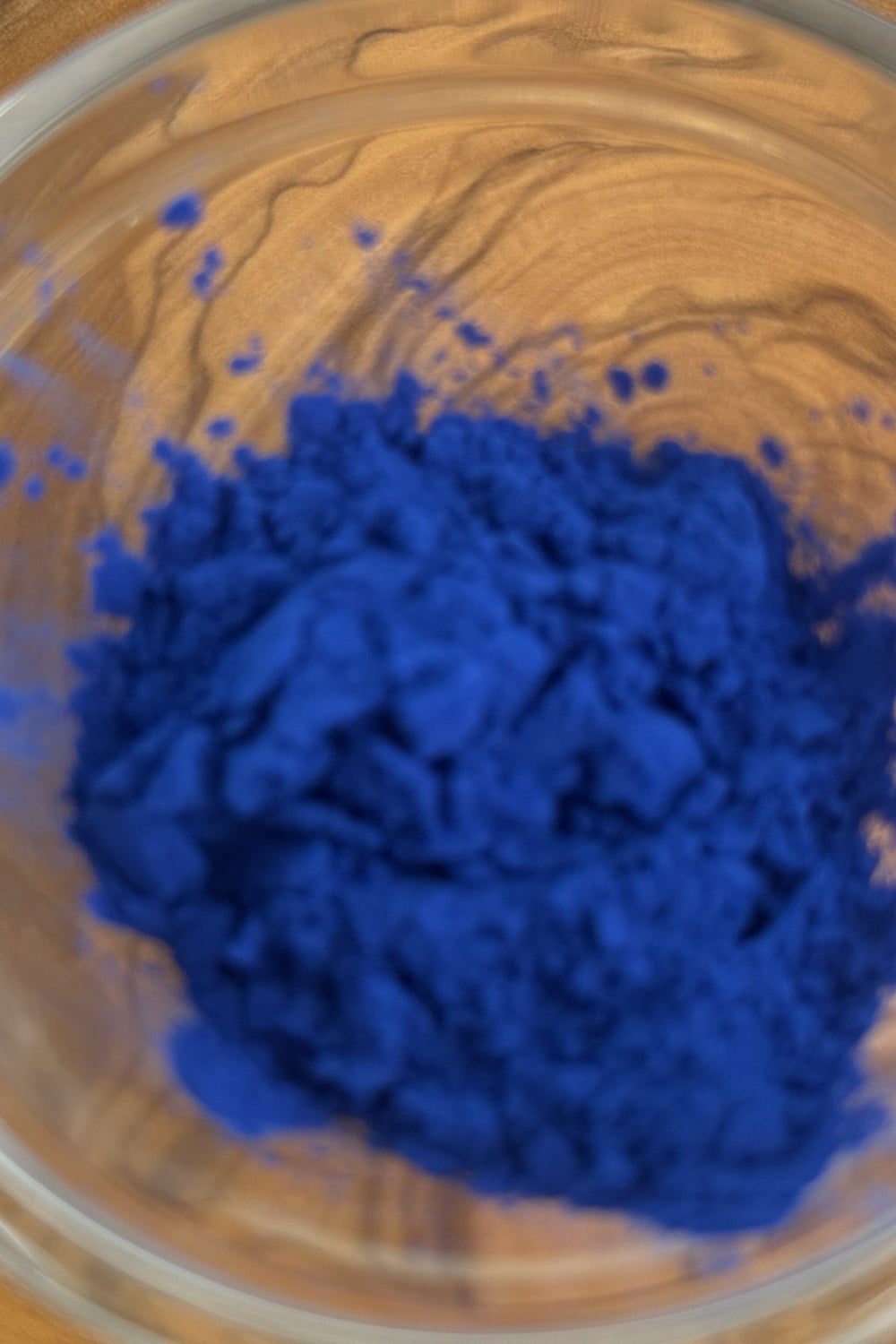
Step 2: Add a quarter teaspoon of food-grade blue spirulina powder to start. Blue spirulina is a natural pigment extracted from algae. It gives a softer, dustier blue than gel and doesn’t tint the flavor at this amount, which makes it the right pick for mermaid frosting, ocean vibe frosting, and any pastel baby shower frosting or gender reveal frosting where you want the color to feel calm rather than candy-bright.
Step 3: Whisk the powder in with a small whisk or a fork first, working out any clumps before you switch to a spatula. Spirulina clumps if you try to fold it in cold with a flat tool. Once the powder is dispersed, finish the mix with the spatula to get a smooth, even shade.
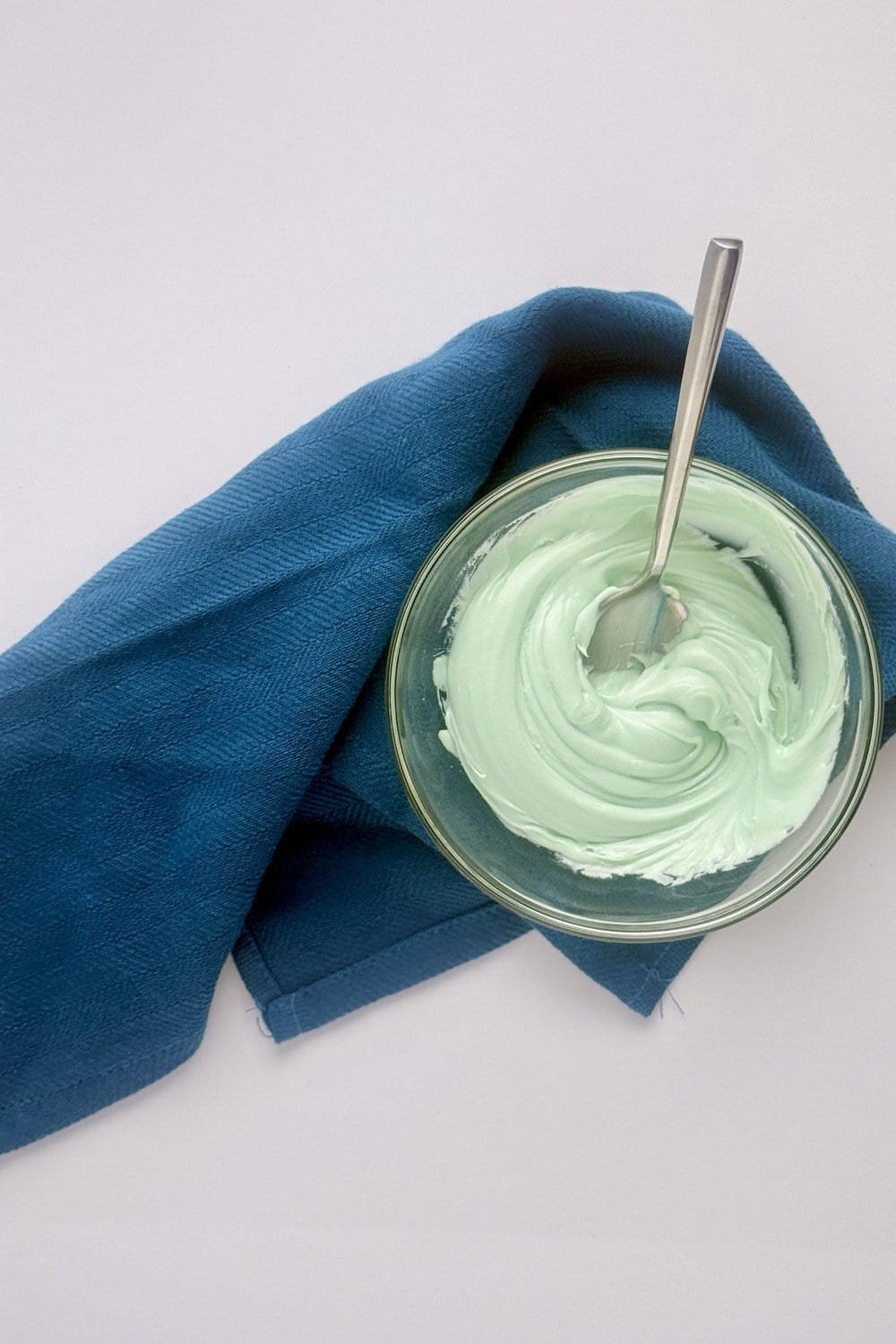
Step 4: Look, taste, adjust. A quarter teaspoon gets you a pale ocean blue. Half a teaspoon hits a stronger mid-tone. Three quarters of a teaspoon takes you into a saturated teal. Past that you’ll start to pick up a faint vegetal note in the finish. Back off and accept the shade you have at that point.
Tools and Equipment
- Two medium mixing bowls
- Two rubber spatulas, one for each color if you’re experimenting with both
- Small whisk or fork (for spirulina)
- Toothpicks (optional, useful for measuring tiny amounts of gel)
- Piping bags and tips or an offset spatula
- Airtight container (for storing extra)
Tips for Success
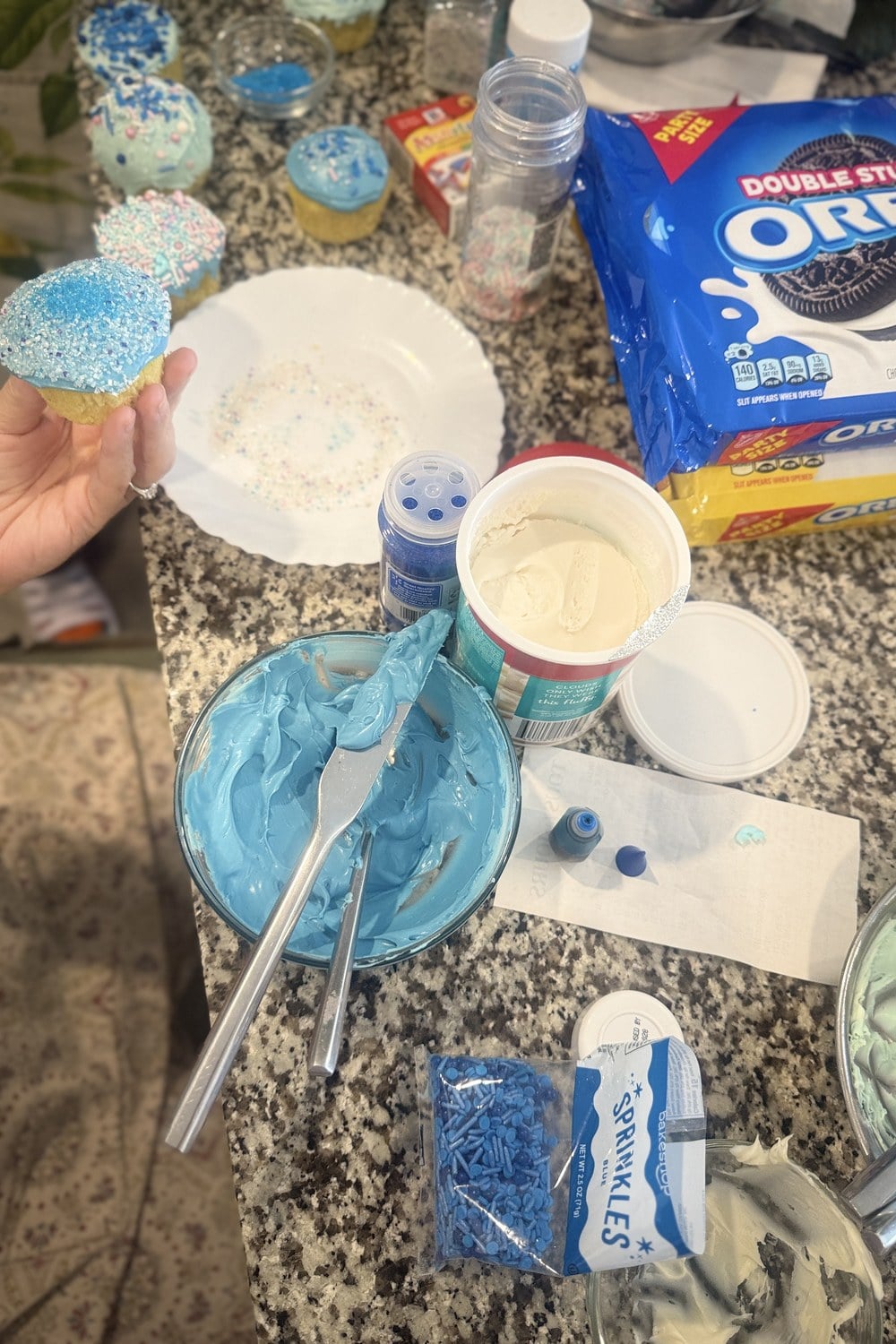
Making a mess but having a blast!
Start lighter than the shade you actually want. Both gel and spirulina deepen slightly as the frosting sits. A bowl that looks almost-there at mixing time usually hits the right shade after twenty minutes on the counter.
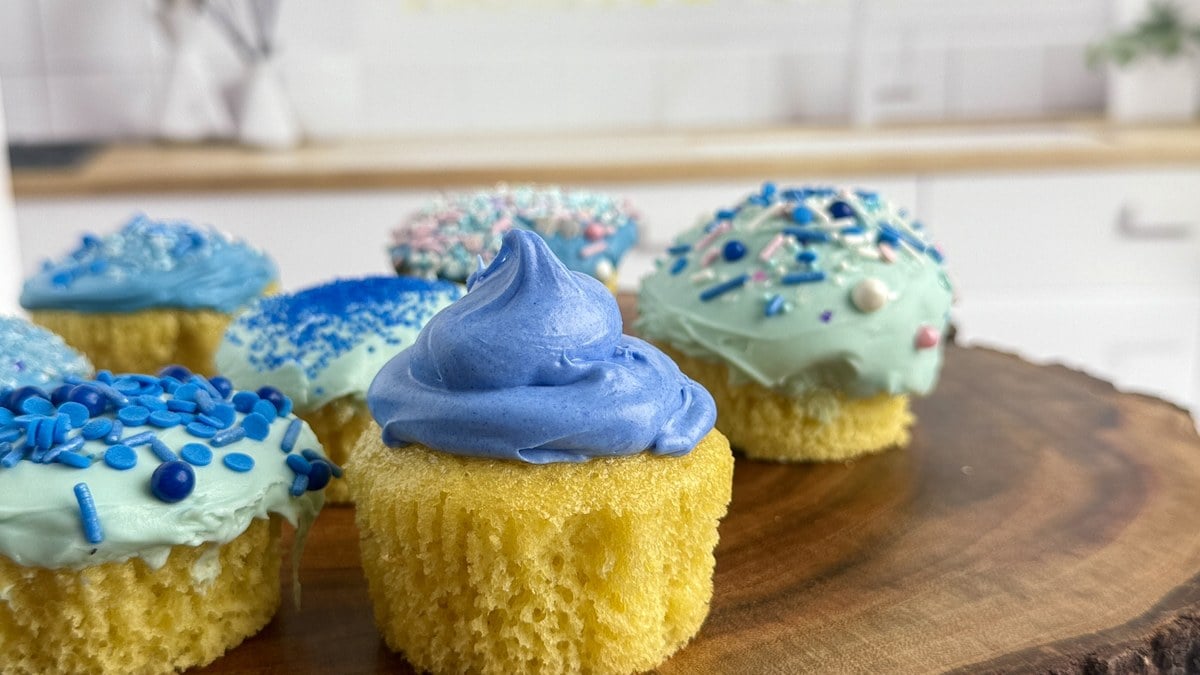
Layer the two methods for muted shades. A pinch of blue spirulina on top of a gel-tinted frosting knocks the synthetic brightness back and gets you to a more sophisticated teal. We used this trick to get the dusty mint and muted aqua shades in the cupcake set.
The base frosting matters. Great Value Vanilla pulls slightly warmer (a hint of cream), Pillsbury Classic White is more neutral. The same amount of coloring reads a touch cooler on Pillsbury. Neither is wrong, pick the one that matches the final shade you’re after.
Watch the light. Synthetic blues fade in direct sun. If you’re decorating cupcakes for an outdoor party, frost them at the venue or keep them shaded until serving. Spirulina holds up better in light but melts faster in heat.
For piping, give it a short chill. Ten minutes in the fridge firms both tinted frostings enough to hold a clean piped swirl. Don’t refrigerate longer than that or the surface starts to crack when you pipe.
Store leftovers airtight. Both versions keep at room temperature for two days or in the fridge for a week. Bring chilled frosting back to room temperature and stir before using.
WANT TO SAVE THIS?
How to Make Blue Frosting (Two Ways)
Ingredients
Method 1: Gel Food Coloring
- 1 tub (16 oz) white frosting Great Value Vanilla or Pillsbury Classic White
- 2-8 drops blue gel food coloring royal or sky blue
Method 2: Blue Spirulina
- 1 tub (16 oz) white frosting Great Value Vanilla or Pillsbury Classic White
- 1/4 – 1 t food-grade blue spirulina powder start with 1/4 t and adjust
Instructions
Method 1: Gel Food Coloring
- Empty frosting into a medium bowl. Stir for a few seconds with a spatula to loosen.
- Add gel coloring one drop at a time. Start with two drops, add more for deeper shades (up to eight or more for navy).
- Fold the gel into the frosting with a spatula until the color is fully uniform with no streaks.
- If the frosting tightens, rest five minutes on the counter and stir once more before use.
Method 2: Blue Spirulina Powder
- Empty frosting into a separate medium bowl. Stir to loosen.
- Add 1/4 t blue spirulina powder. Whisk in with a small whisk or fork to break up clumps.
- Switch to a spatula and finish mixing until the shade is even.
- Adjust 1/8 t at a time for deeper teal, stopping at 3/4 t to avoid any vegetal note.
Notes
Frequently Asked Questions
Is blue spirulina safe to eat?
Yes. Food-grade blue spirulina (phycocyanin) is approved for use in food and sold for exactly this kind of natural coloring. Look for packaging labeled food-grade (here’s the organic blue spirulina powder I used—Amazon affiliate link) and follow the serving suggestion on the package.
Will my frosting taste like algae?
Not at the amounts used here. Up to half a teaspoon per tub is flavor-neutral on a sweet base like frosting. It’s personal preference of course, but I thought it started to have a vegetal or “off” taste at the 2 teaspoon mark and it did seem to affect the texture a bit, making it just a touch harder to stir and spread.
Can I use this on cake instead of cupcakes?
Yes. Both methods work on layer cakes, sheet cakes, sugar cookies, brownies, donuts, anything you’d frost or pipe. One tub covers about a dozen cupcakes or one 9-inch single-layer cake. As you can see, I haven’t been practicing my piping skills, so I just frosted these cupcakes with a short offset spatula.
How long does tinted frosting last?
Two days at room temperature in an airtight container, or a full week refrigerated. Bring it back to room temp and stir before using again. Blue spirulina does not hold up under heat well, so if you are trying to quickly bring it to room temp, avoid the microwave for longer than 20 seconds, and just give it 30-45 minutes on the counter.
Can I make blue frosting without food coloring?
Yes. Method 2 (blue spirulina) is a completely artificial-dye-free option. Butterfly pea flower powder also produces a natural blue but trends more purple-violet than true blue.
Why is my frosting turning green or purple?
If your white base is even slightly cream-tinted (like Great Value Vanilla), blue gel can look greenish, still pretty but not true blue. Switch to a more neutral base like Pillsbury Classic White or add a tiny dot of violet gel to push it back toward true blue.
Can I use liquid food coloring instead of gel?
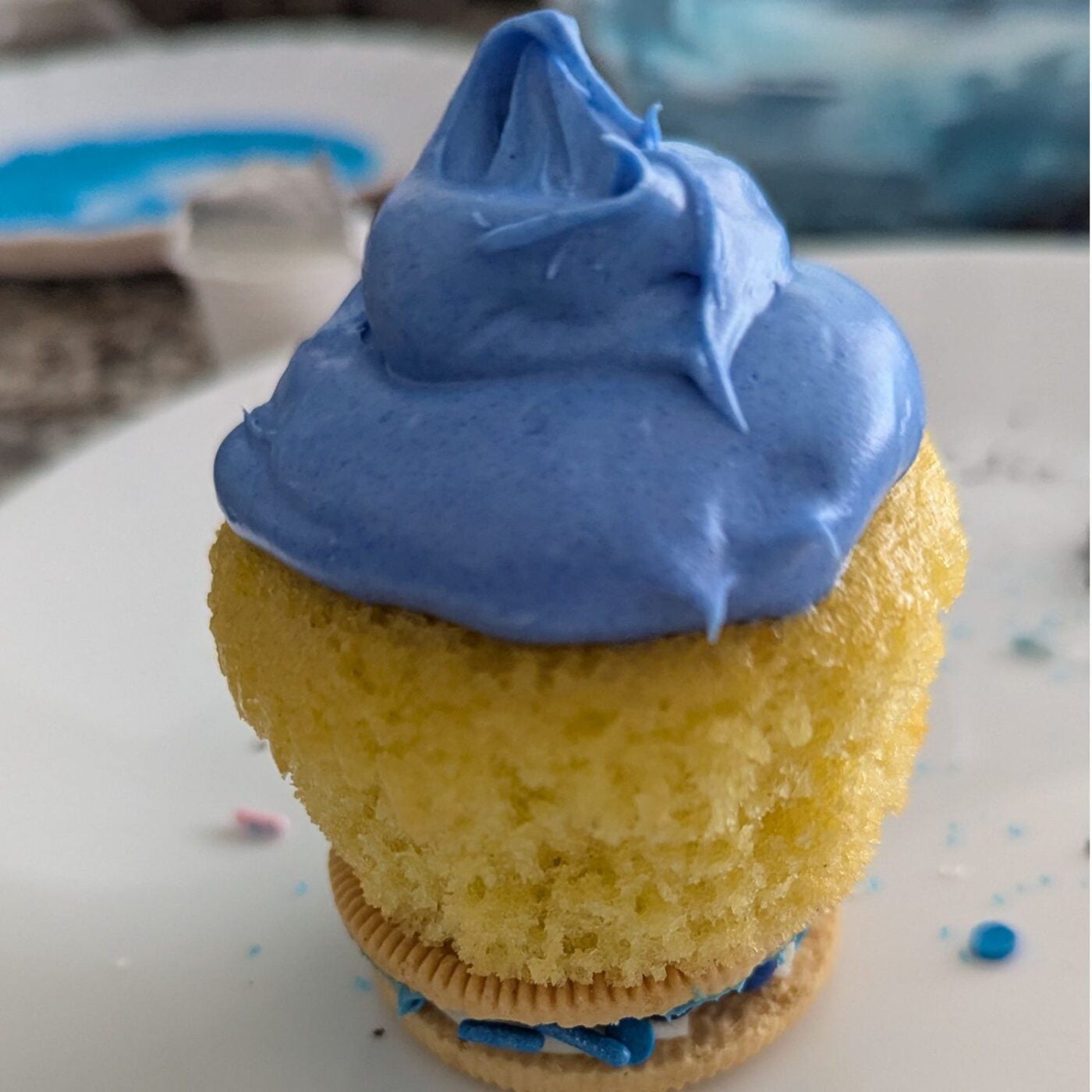
You can, but the extra liquid thins the frosting. Liquid coloring needs four to six times the volume of gel to hit the same shade. If liquid is what you have, add it a drop at a time and stop the moment the color is right. Notice on this cupcake how the frosting turns a little looser.
Try This Blue Frosting On:
- My Beachy Cupcakes—the blue frosting holds Teddy Grahams lounging on the sea!
- Renee’s adorable Dipped Rice Krispies Treats
- Vanilla or chocolate cupcakes for a Frozen birthday party or mermaid party
- Sugar cookies for a baby shower (use spirulina for a soft pastel with a natural vibe)
- A 4th of July fruit pizza (alternate the gel-blue and spirulina-teal in a striped pattern across white topping)
- Donuts for a beach or shark party
- Or try our White Dipping Chocolate and make Dipped OREOs, Dipped Potato Chips and Dipped Pretzel Rods!
The bottom line
You don’t need to make frosting from scratch to make it blue. A tub of white frosting plus blue gel food coloring or blue spirulina powder gets you anywhere on the blue spectrum: pale baby-shower sky, mermaid teal, Frozen-blue, deep navy ocean, or 4th of July frosting for star-spangled cupcakes. Gel food coloring frosting gets you saturated and bright in about thirty seconds. Blue spirulina frosting gets you a softer, naturally tinted blue with no artificial dye. Both pipe clean, both hold their color, and both take less than five minutes from open tub to finished bowl.


